
Dr. Rujul G. Parikh DDS has dedicated over 25 years to crafting radiant, healthy smiles. As a General Dentist at Spreckels Park Dental in Manteca, CA, he prioritizes patient care and oral health. With a commitment to continuing education, Dr. Parikh stays at the forefront of dental advancements, offering expertise in Dental Implants, Root Canals, Crowns, Dentures, and more. Trust your smile to Dr. Parikh for compassionate care and exceptional results.
Introduction
Losing one tooth can feel frustrating. Losing several teeth at once can feel overwhelming. Many patients who visit dental offices today are not just asking whether implants work. They are asking a more practical question: How many implants can I actually get at one time?
Some people want to replace several damaged teeth in a single appointment. Others are looking for a complete smile transformation after years of dental problems. Many patients also want to reduce the number of surgeries, shorten healing time, and avoid repeated visits whenever possible.
The good news is that modern implant dentistry allows far more flexibility than many people realize.
Today, patients may qualify for a single implant, several implants in one appointment, or even a complete full-mouth restoration during a same-day dental implant procedure, depending on their oral health, bone condition, and treatment goals, according to Dr. Rujul G. Parikh. Advanced digital planning, improved imaging technology, and modern surgical techniques now allow dentists to safely place multiple implants in carefully planned stages.
But there is an important truth many people do not hear often enough: the “right number” of implants is never the same for every patient.
Some patients can comfortably receive two or three implants in one session. Others may qualify for full-mouth implant treatment supported by only four to six implants per arch. The safest and most successful approach depends on careful evaluation and thoughtful planning.
This blog explores what determines the number of implants you can receive at once, how dentists decide on treatment plans, what recovery looks like, and how modern implant procedures are changing the patient experience.
When One Implant Turns Into a Bigger Conversation
Many implant consultations begin with a single missing tooth.
Then something interesting happens during the examination.
Dentists may discover additional teeth with severe damage, hidden infection, advanced wear, or failing dental work. Patients sometimes realize they have been chewing on one side of the mouth for years. Others admit they avoid smiling in photos or struggle with loose dentures daily.
What started as “fixing one tooth” suddenly becomes a discussion about rebuilding confidence, function, and long-term comfort.
This is where the conversation about the number of dental implants per session, Dr. Rujul G. Parikh, becomes important.
Modern dentistry no longer approaches every missing tooth as an isolated problem. Instead, treatment planning often focuses on improving the overall health, stability, and function of the entire mouth.
For some patients, replacing several teeth at once may reduce healing time, simplify recovery, and achieve more balanced long-term results.
So, How Many Implants Can You Get at One Time?
There is no universal limit.
In many healthy patients, dentists can safely place multiple implants during a single appointment. Some patients receive two to four implants in one visit, while others undergo complete full-mouth reconstruction using strategically placed implants.
The exact number depends on several key factors:
Bone density and jaw strength
Overall oral health
Gum condition
Existing infection or tooth damage
Smoking history
Medical conditions
Healing ability
Bite pressure and jaw alignment
Whether extractions are needed first
A patient missing several teeth in different areas may receive multiple tooth implants in one visit, Dr. Rujul G. Parikh, if the bone structure is healthy enough to support implant placement safely.
Meanwhile, patients with severe bone loss or gum disease may require treatment in stages to improve long-term implant success.
The goal is never to place “as many implants as possible.” The goal is to create a stable, healthy foundation that lasts for years.
The Rise of Same-Day Smile Transformations
One of the most exciting developments in implant dentistry is the growing popularity of the same-day dental implant procedure, Dr. Rujul G. Parikh.
Years ago, implant treatment often involved long waiting periods between extractions, healing, implant surgery, and final restoration placement.
Today, many patients can leave their appointment with temporary teeth attached to newly placed implants.
This does not mean every patient receives permanent teeth immediately. Instead, temporary restorations are often used while the implants heal and bond with the jawbone over several months.
Still, the emotional impact can be enormous.
Patients who once expected months without teeth may now walk out with a functional smile much sooner than anticipated.
Same-day procedures may involve:
Immediate implant placement after extraction
Temporary bridges
Full-arch restorations
Implant-supported dentures
Multiple implants were placed during one surgery
However, same-day treatment is not appropriate for every situation. Careful planning remains extremely important for long-term success.
Why Full-Mouth Implant Cases Often Use Fewer Implants Than Expected
One of the biggest surprises for patients is learning that replacing every tooth does not require one implant per tooth.
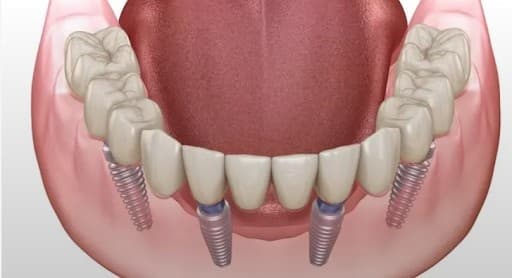
In many full-mouth cases, dentists strategically place four to six implants to support an entire upper or lower arch.
This approach has transformed full-arch dental implants planning, Dr. Rujul G. Parikh, by making full-mouth restoration more efficient, stable, and accessible for many patients.
Instead of placing 28 individual implants, the dentist uses carefully angled implant positioning to support a complete fixed restoration.
Benefits may include:
Fewer surgeries
Reduced treatment time
Lower overall cost
Faster healing
Improved chewing ability
Greater denture stability
More natural smile function
This approach is commonly used for patients with extensive tooth loss or severe dental damage.
The Biggest Factor Nobody Talks About: Bone Quality
When patients ask how many implants they can receive, the real answer often comes down to bone.
Dental implants rely on strong jawbone support. Without enough healthy bone, implants may not stabilize properly.
This is why imaging technology plays such a major role during consultations.
Modern digital scans allow dentists to evaluate:
Bone thickness
Bone density
Nerve location
Sinus position
Jaw shape
Existing damage or infection
Some patients naturally have excellent bone support and can comfortably receive several implants in a single appointment.
Others may require:
Bone grafting
Sinus lifts
Gum treatment
Healing periods before implant placement
Interestingly, patients who have been missing teeth for many years often experience bone shrinkage. The jawbone slowly weakens because it no longer receives stimulation from natural tooth roots.
This is one reason dentists often recommend replacing missing teeth sooner rather than later.
Can You Get Upper and Lower Implants at the Same Time?
Yes, many patients can.
For patients undergoing major smile restoration, upper and lower implants are often planned together to improve bite balance and shorten overall treatment time.
This can be especially helpful for patients who:
Wear loose dentures
Have multiple failing teeth
Experience severe chewing difficulty
Want a complete smile reconstruction
However, these cases require careful coordination.
Longer appointments, more extensive healing, and temporary dietary changes may all be involved. Dentists carefully evaluate whether combining procedures is the safest option for each patient.
The Emotional Side of Implant Dentistry
Dental implant conversations are often deeply emotional.
Many patients have spent years hiding their smile, avoiding crunchy foods, or feeling embarrassed during conversations. Some struggle with old dental experiences that created anxiety or fear around treatment.
Others feel discouraged after repeated dental problems over the years.
This is why implant consultations today involve much more than surgery planning.
Patients want reassurance.
They want honesty.
They want to understand what recovery will feel like and whether life will actually improve afterward.
The emotional shift after implant treatment can be significant. Patients often describe feeling more comfortable eating in public, smiling in photographs, or speaking confidently during work and social interactions.
For many people, implants are not simply about replacing teeth. They are about restoring normal life again.
Recovery After Multiple Implants
One of the most common fears patients have is whether recovery becomes dramatically harder when several implants are placed together.
Surprisingly, many patients tolerate multiple implants quite well.
Some swelling, soreness, and temporary dietary adjustments are normal, especially during the first few days. However, modern surgical planning and improved techniques have made recovery more manageable than many people expect.
Recovery instructions often include:
Eating softer foods temporarily
Avoiding smoking
Keeping the mouth clean
Attending follow-up appointments
Taking medications as directed
Allowing proper healing time
Patients undergoing larger full-mouth procedures may experience a longer adjustment period, but many still return to regular daily activities relatively quickly.
Healing timelines vary depending on the complexity of treatment and individual health factors.
Are More Implants Always Better?
Not necessarily.
This is one of the biggest misconceptions in implant dentistry.
More implants do not automatically create better results.
In fact, placing unnecessary implants may increase surgical complexity, healing demands, and cost without improving function.
Good implant planning focuses on balance, support, bite function, and long-term durability.
Sometimes, fewer strategically placed implants create better overall outcomes than placing a larger number without proper planning.
This is why personalized treatment planning matters so much.
What Makes Someone a Good Candidate for Multiple Implants?
Patients who often qualify for multiple implants during one procedure typically have:
Healthy gums
Good bone support
Stable overall health
Controlled medical conditions
Good oral hygiene habits
Non-smoking or reduced smoking habits
Realistic expectations about healing
However, even patients with bone loss or previous dental problems may still qualify after preparatory treatment.
Modern implant dentistry has expanded treatment possibilities dramatically over the past decade.
Many patients who were once told they were not implant candidates may now have successful treatment options available.
How Technology Has Changed Implant Treatment
Modern implant dentistry looks very different today than it did even ten years ago.
Digital workflows now allow dentists to create highly customized treatment plans using advanced imaging and guided surgical systems.
Technology may help improve:
Implant precision
Surgical efficiency
Healing predictability
Restoration fit
Patient comfort
Treatment visualization
Patients can often see digital previews of their future smile before treatment even begins.
This level of planning helps reduce uncertainty and improve communication throughout the process.
Key Takeaways
The number of implants placed during a single appointment depends on bone and oral health, as well as treatment goals.
Many patients safely receive multiple implants during a single procedure.
Full-mouth restoration often requires fewer implants than patients expect.
Same-day implant procedures may allow temporary teeth placement immediately after surgery.
Strong bone support plays a major role in determining implant success.
Modern technology has made implant treatment more precise and comfortable than ever before.
Personalized planning remains the most important part of long-term implant success.
FAQs
1.Can I get all my dental implants in one day?
Some patients qualify for same-day implant procedures, in which implants and temporary teeth are placed during a single appointment. Eligibility depends on bone quality, gum health, and overall
oral condition.
2.Is getting multiple implants painful?
Most patients experience manageable soreness and swelling after implant surgery. Modern techniques, digital planning, and sedation options help improve comfort during treatment and recovery.
3.How many implants are needed for full-mouth restoration?
Many full-mouth restorations use four to six implants per arch rather than one implant per tooth. The exact number depends on your individual treatment plan.
4.Can older adults get multiple implants at once?
Yes. Age alone does not prevent implant treatment. Many healthy older adults successfully undergo multiple implant procedures after proper evaluation.
5.How long does recovery take after multiple implants?
Initial healing often takes several days to a few weeks, while full implant integration with the jawbone may take several months. Recovery varies depending on the complexity of treatment.
Conclusion
Dental implant treatment is no longer limited to replacing a single missing tooth at a time. Modern dentistry now allows many patients to restore several teeth or even an entire smile through carefully planned procedures designed around comfort, safety, and long-term function.
The answer to “How many implants can you get at one time?” depends entirely on your oral health, jaw structure, and treatment goals. Some patients may qualify for a few implants in a single visit, while others may benefit from full-mouth restoration using advanced implant planning techniques.
The most important step is not choosing the number of implants. It is choosing a treatment approach that protects your long-term oral health while helping you regain confidence, comfort, and daily function.
A personalized consultation can help determine the safest and most effective path forward for your smile.
For directions, use this helpful Google Map or get step-by-step navigation through Get Directions.
Remember: Dental implants are not just about replacing teeth. They are about restoring comfort, confidence, and the ability to enjoy everyday life again. A personalized treatment plan always creates the strongest long-term results.
Disclaimer: This blog is intended for educational purposes only and should not replace professional dental advice, diagnosis, or treatment. Please consult a qualified dental provider for recommendations based on your individual oral health needs.